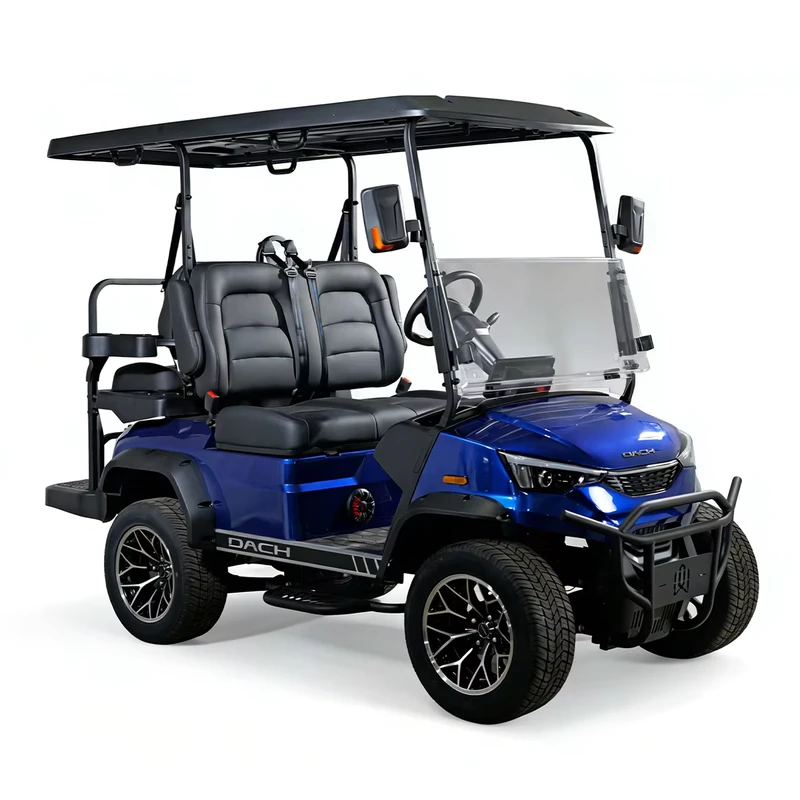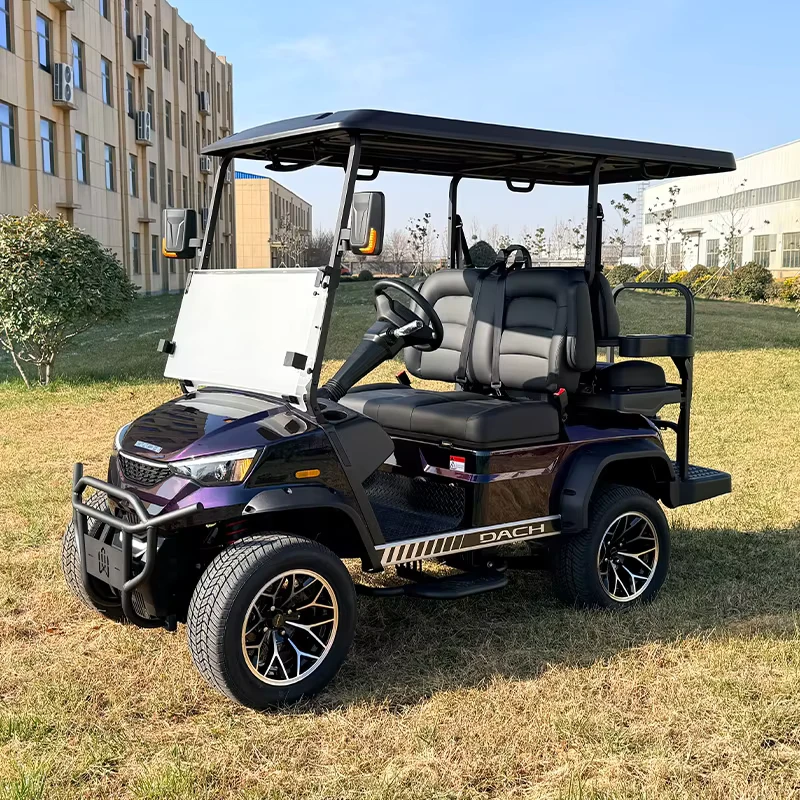

Compare four- and six-seat electric golf carts by range, speed, dimensions, and battery setup to plan a practical site mobility fleet.
Passenger capacity is only one part of selecting an electric golf cart. Importers and project buyers should also consider route length, gradients, charging windows, vehicle dimensions, and expected daily usage. A mixed fleet can often serve large properties more efficiently than relying on one configuration for every transport task.
Four-seat options for different operating priorities
The premium four-seat cart combines a spacious interior with a stated driving range of 70–90 km, 5–7-hour charging, and a maximum speed specification of 50–70 km/h. Its 200–250 mm ground clearance and front and rear disc brakes make it a relevant option for buyers comparing vehicles for extensive private grounds, managed communities, or hospitality properties.
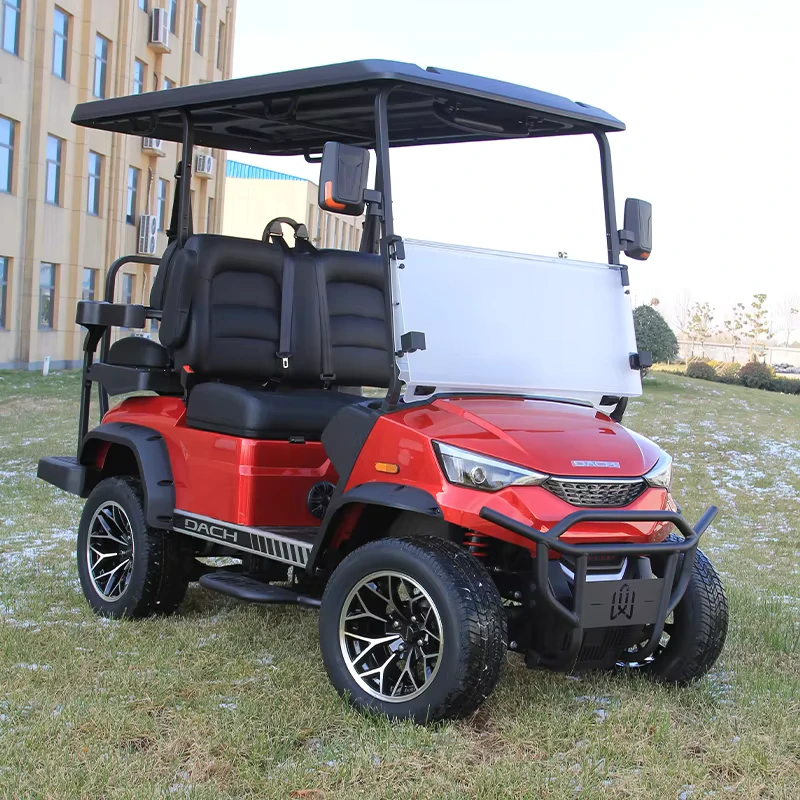
Where longer range and climbing ability are priorities, the F11 G2+2 model offers a stated range of at least 90 km, grade ability of at least 25 degrees, a 72V 105Ah lithium battery, and a 6.3 kW AC motor. Its four-seat layout and 2,900 mm overall length can suit operations that need passenger capacity without moving to a larger shuttle body.
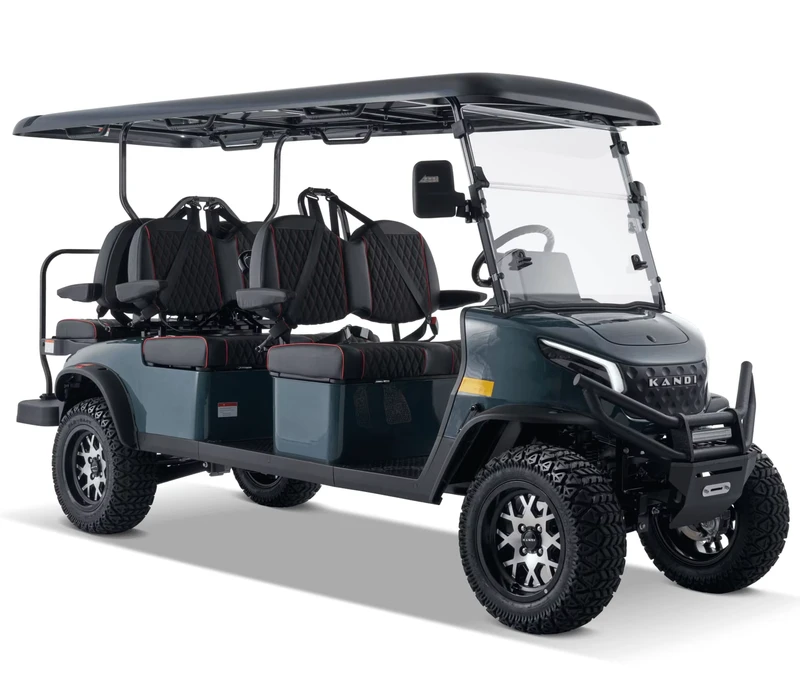
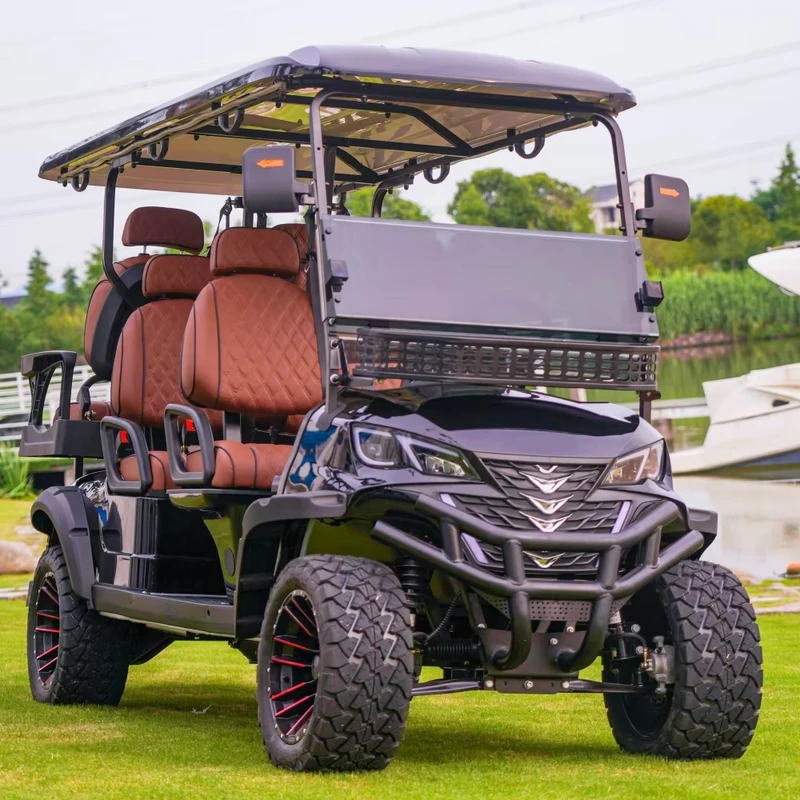
When six seats improve route efficiency
For scheduled transfers or higher passenger volumes, the six-seat electric cart provides a 48V 150Ah battery, 5 kW motor, stated range of at least 90 km, and MacPherson independent front suspension. At 3,950 mm long, it requires more maneuvering and parking space, but its additional capacity may reduce the number of trips needed.
Before ordering, compare route conditions, charging infrastructure, local certification requirements, and preferred battery technology across the wider four-seat cart range. Final specifications should be confirmed for the selected configuration. Contact our team to discuss quantities, customization, documentation, and export delivery requirements.